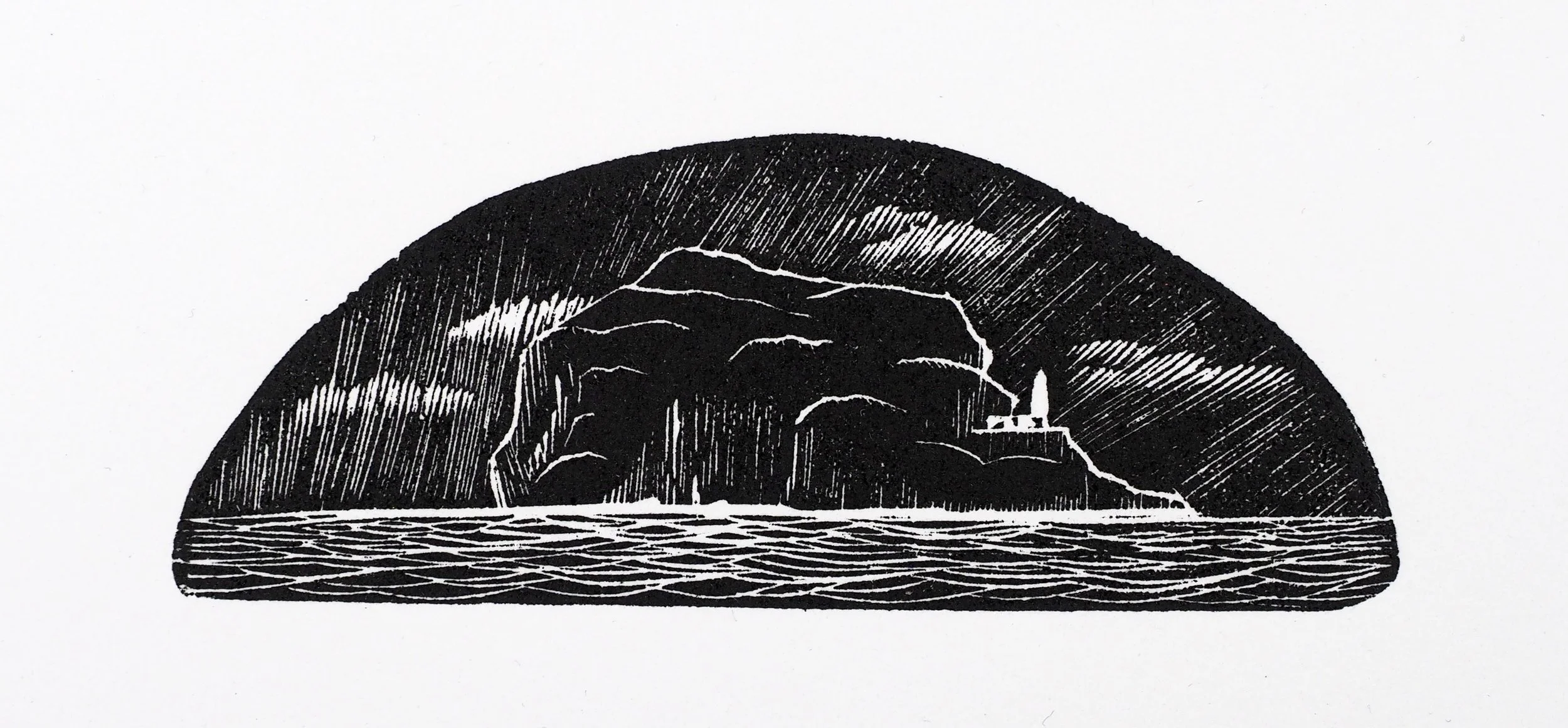
What is wood engraving?
WOOD The starting point for a wood engraving is a block of wood cut across the grain and sanded/polished to a smooth finish. Only the wood of a few species is fine-grained and dense enough to facilitate the detailed engraving that characterises the approach. The best and most widely used species are Box (Buxus sempervirens) and Lemonwood (Calycophyllum candidissimum). Pear, maple and holly are also used. Other techniques, such as Japanese wood block printing, typically use larger pieces of wood from a wider range of species, cut along the grain, and the grain itself may be incorporated in the print design, e.g. as water or sky.
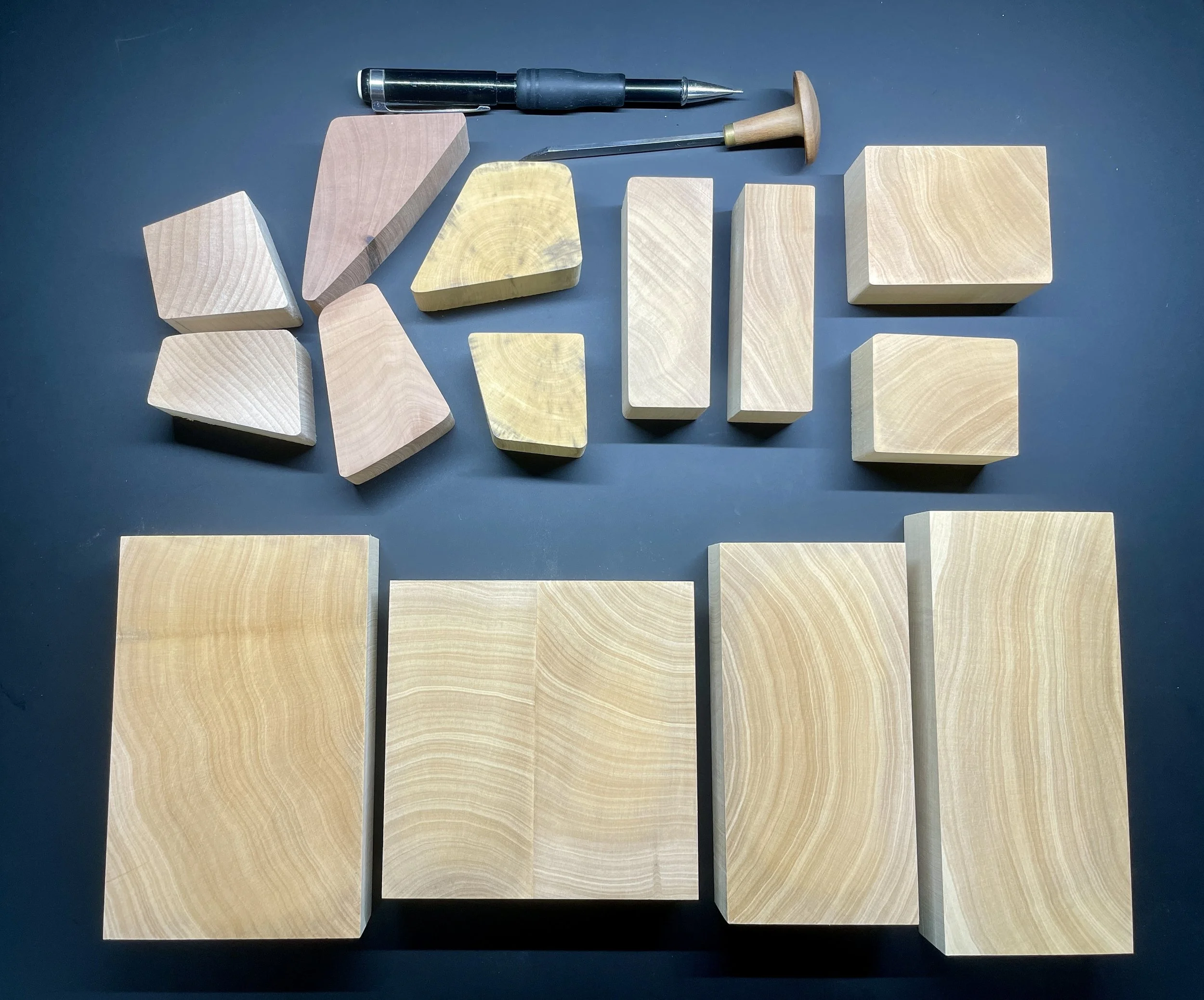
Maple (2), pear (2), box (2) and lemonwood (4) practise pieces with larger lemonwood blocks below them. Pencil and engraving tool for scale.
ENGRAVING The wood block is wiped lightly with (usually) black ink before the design is drawn on the smooth surface. Engraving requires planning and care. It is a one way process - mistakes are irreversible, you can’t put the wood back, you can only alter the design to conceal or adapt. As you engrave, the underlying un-inked wood reveals the design. The engraving is typically shallow. Wood engraving tools have evolved from those used in metal engraving and come with a variety of functional tip shapes, in a range of sizes in each, and with largely unhelpful names. Most of the time engraving is a slow process, even a small block can take days or weeks to engrave.
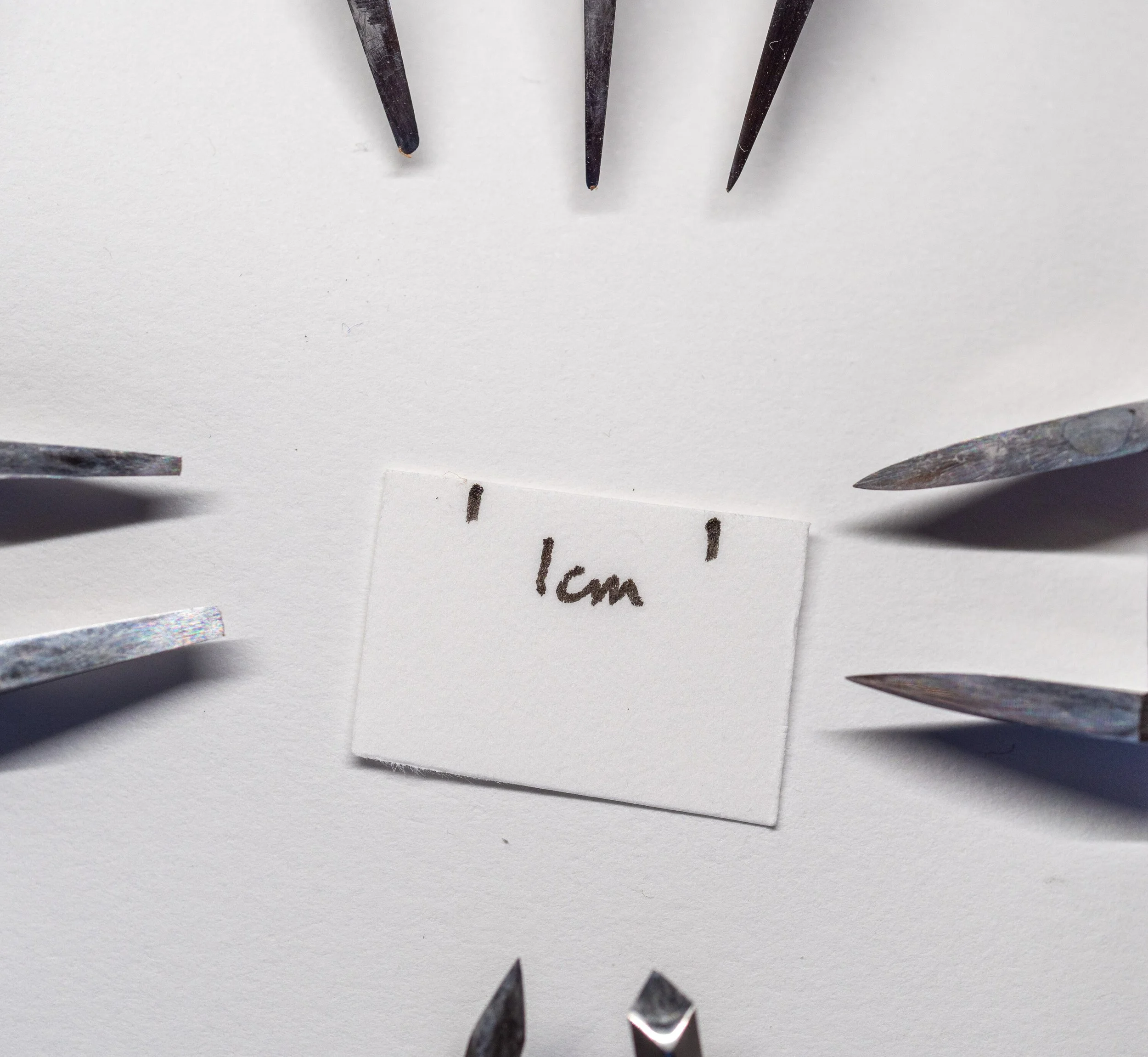
Tip shapes of wood engraving tools: square, rounded, pointed, lozenge shaped and more.
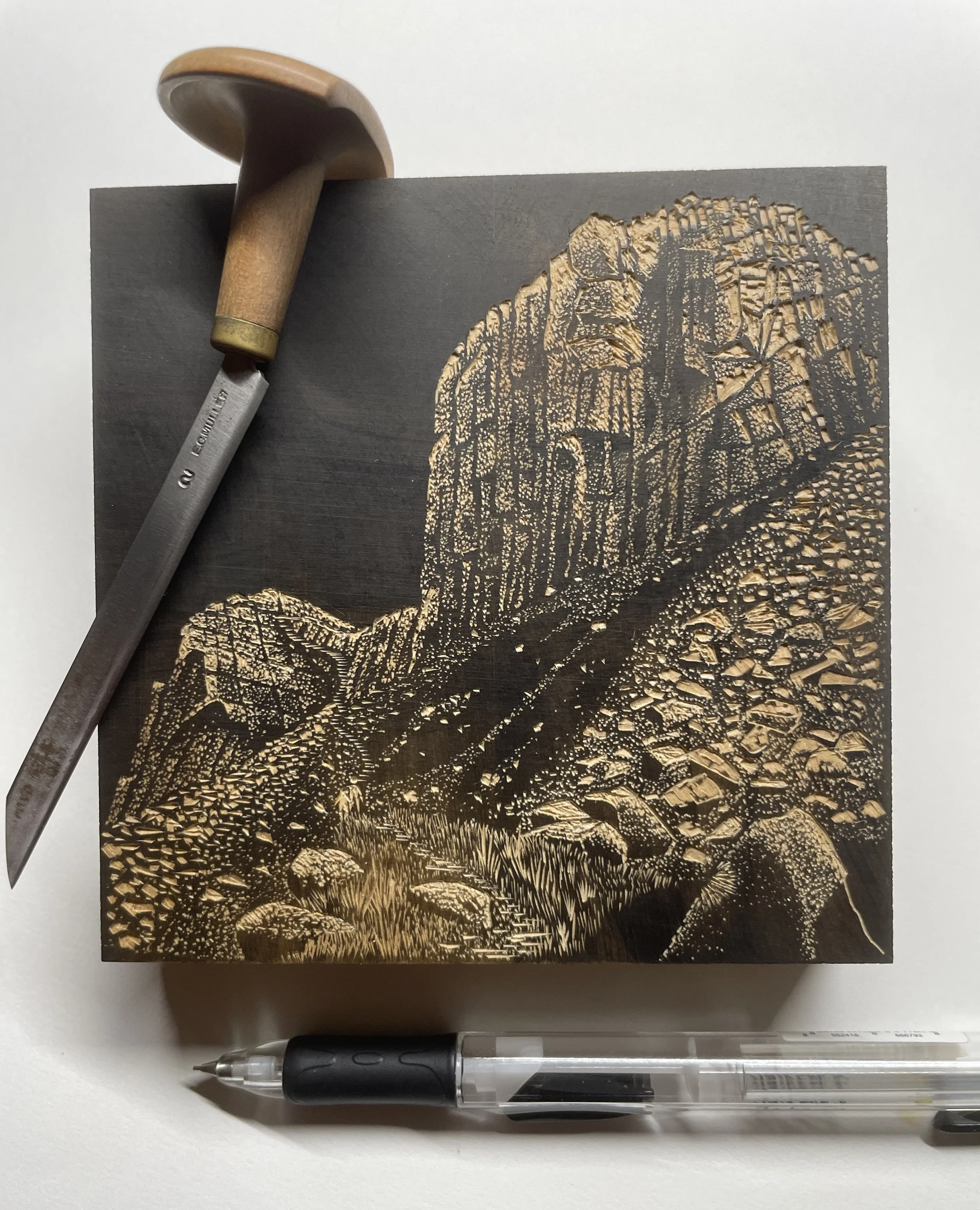
A 100mm square block of lemonwood with an engraving being revealed as the inked surface wood is removed. Engraving tool and pencil for scale
PRINTING A very thin layer of thick, tacky, oil-based ink is rolled onto the surface of the finished engraving. A print is made by placing a sheet of acid-free, archive quality paper on the block and “burnishing” - rubbing over the paper with a hard, smooth, tool - purpose made, improvised, or the back of a spoon! Alternatively prints can be made by pressing the paper onto the inked block in a printing press. All of my prints are burnished.
Prints are typically black, printed in a single layer, but can be printed in several differently coloured layers. Either a separate block is made for each layer or a single block is engraved and printed in several stages. Both require careful planning and execution. I have just begun to experiment with multicoloured prints.
If you would like to try engraving a good place to start would be the Society of Wood Engravers website: https://www.societyofwoodengravers.co.uk